Why do Hindus revere the cow?
Must Hindus be vegetarian?
Hinduism is the world’s oldest religion, yet the word ‘Hindu’ was never used before the 18th century by Hindus to describe themselves. it is defined as polytheistic, but Gandhi declared that a Hindu needn’t believe in any god. it is a religion as much of myth as of history – it has no founder, no single authoritative book, even few central doctrines.
Introducing Hinduism offers a guide to the key philosophical, literary, mythological and cultural traditions of the extraordinarily diverse faith. It untangles the complexities of Hinduism’s gods and goddesses, its caste system and its views on sex, everyday life and asceticism.
Vinay Lal and Borin Van Loon’s hugely enjoyable tour through Hinduism also explores its links with and differences from Buddhism, Jainism and other religions, the resurgence of Hindu extremism, the phenomenon of Bollywood and the overseas Hindu diaspora.

Martin Heidegger – philosophy’s ‘hidden king’, or leading exponent of a dangerously misguided secular mysticism. Heidegger has been acclaimed as the most powerfully original philosopher of the twentieth century. Profoundly influential on deconstruction, existentialism and phenomenology, he stands behind all major strands of post-structuralist and postmodern thought. Heidegger announced the end of philosophy and of humanism, and was a committed Nazi and vocal supporter of Hitler’s National Socialism. Was Heidegger offering a deeply conservative mythology or a crucial deconstruction of philosophy as we have known it? “Introducing Heidegger” provides an accessible introduction to his notoriously abstruse thinking, mapping out its historical contexts and exploring its resonances in ecology, theology, art, architecture, literature and other fields. The book opens up an encounter with a kind of thinking whose outlines might still not yet be clear, and whose forms might still surprise us.
INTRODUCING guide to the hugely influential German thinker. Georg Wilhelm Friedrich Hegel is one of the greatest thinkers of all time. No other philosopher has had such a profound impact on the ideas and political events of the 20th century. Hegel’s influential writings on philosophy, politics, history and art are parts of a larger systematic whole. They are also among the most difficult in the entire literature of philosophy. Introducing Hegel guides us through a spectacular system of thought which aimed to make sense of history. The book also provides new perspectives on contemporary postmodern debates about ‘metanarratives’ (Lyotard) and the ‘end of history’ (Fukuyama). It is an ideal introduction to this crucial figure in the history of philosophy, and is indispensable for anyone trying to understand such key modern thinkers as Marx, Lacan, Satre and Adorno.
Genetics is the newest of all sciences – nothing useful was known about inheritance until just over a century ago. Now genetics is exploding, and before long we will have the complete code, written in three thousand million letters of DNA, of what makes a human being.
Introducing Genetics takes us from the early work of Mendel to the discovery of DNA, the human gene map and the treatment of inborn disease. No one can afford to be ignorant of genetics. This book is the perfect introduction.
When should you adopt an aggressive business strategy? How do we make decisions when we don’t have all the information? What makes international environmental cooperation possible?
Game theory is the study of how we make a decision when the outcome of our moves depends on the decisions of someone else. Economists Ivan and Tuvana Pastine explain why, in these situations, we sometimes cooperate, sometimes clash, and sometimes act in a way that seems completely random.
Stylishly brought to life by award-winning cartoonist Tom Humberstone, Game Theory will help readers understand behaviour in everything from our social lives to business, global politics to evolutionary biology. It provides a thrilling new perspective on the world we live in.
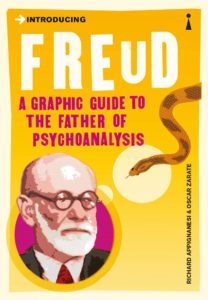
Freud revolutionized the way we think about ourselves. His psychoanalytic terms such as Id, Ego, libido, neurosis and Oedipus Complex have become a part of our everyday vocabulary.
But do we know what they really mean?
Introducing Freud successfully demystifies the facts of Freud’s discovery of psychoanalysis. Irreverent and witty but never trivial, the book tells the story of Freud’s life and ideas from his upbringing in 19th-century Vienna, his early medical career and his encounter with cocaine, to the gradual evolution of his theories on the unconscious, dreams and sexuality. With its combination of brilliantly clever artwork and incisive text, this book has achieved international success as one of the most entertaining and informative introductions to the father of psychoanalysis.
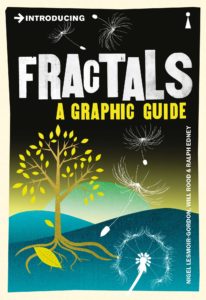
Fractals are the geometry of the natural world. They’re about the broken, wrinkled, wiggly world- the uneven shapes of nature, unlike the idealised forms of Euclidean geometry. We see fractals everywhere; indeed, we are fractals ourselves.
Fractal geometry is an extension of classical geometry which can make precise models of physical structures, from ferns to galaxies. It can describe the shape of a cloud as precisely as an architect can describe a house.
Introducing Fractals traces the historical development of this mathematical discipline, explores its descriptive powers in the natural world, and then looks at the applications and the implications of the discoveries it has made.
As John Archibald Wheeler, protégé of Niels Bohr, friend of Albert Einstein and mentor of Richard Feynman has said, ‘No one will be considered scientifically literate tomorrow, who is not familiar with fractals.’
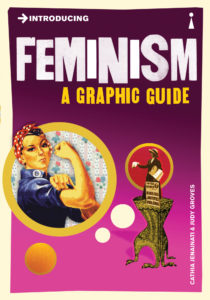
The term ‘feminism’ came into English usage around the 1890s, but women’s conscious struggle to resist discrimination and sexist oppression goes much further back. This completely new and updated edition of “Introducing Feminism” surveys the major developments that have affected women’s lives from the 17th century to the present day. “Introducing Feminism” is an invaluable reference book for anyone seeking the story of how feminism reconfigured the world for women and men alike.
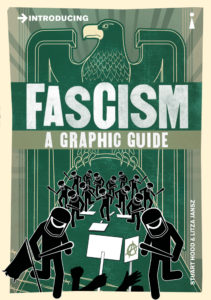
Did Fascism end with the Allied victory over the Axis powers in 1945, or has it been lying dormant and is now re-awakening as we move into the 21st century? Introducing Fascism trace the origins of Fascism in 19th-century traditions of ultra-conservatism, the ideas of Nietzsche, Wagner and other intellectuals which helped to make racist doctrines respectable and which led to the ultimate horrifying ‘logic’ of the Holocaust.
Introducing Fascism investigates the four types of Fascism that emerged after the First World War in Italy, Germany, Spain and Japan. It also looks beyond the current headlines of neo-Nazi hooliganism and examines the increasing political success of the far right in Western Europe and the explosion of ultra-nationalisms in Eastern Europe and the former Soviet Union.
Richard Appignanesi goes on a personal quest of Existentialism in its original state. He begins with Camus’ question of suicide: ‘Must life have a meaning to be lived?’ Is absurdity at the heart of Existentialism? Or is Sartre right: is Existentialism ‘the least scandalous, most technically austere’ of all teachings? This brilliant Graphic Guide explores Existentialism in a unique comic book-style.