Introducing Counselling


What makes philosophy on the continent of Europe so different and exciting? And why does it have such a reputation for being ‘difficult’? Continental philosophy was initiated amid the revolutionary ferment of the 18th century, philosophers such as Kant and Hegel confronting the extremism of the time with theories that challenged the very formation of individual and social consciousness. Covering the great philosophers of the modern and postmodern eras – from Nietzsche, Heidegger, Derrida and Deleuze right to up Agamben and Žižek – and philosophical movements from German idealism to deconstruction and feminism – Christopher Kul-Want and Piero brilliantly elucidate some of the most thrilling and powerful ideas ever to have been discussed.

Introducing Consciousness provides a comprehensive guide to the current state of consciousness studies. It starts with the history of the philosophical relation between mind and matter, and proceeds to scientific attempts to explain consciousness in terms of neural mechanisms, cerebral computation and quantum mechanics. Along the way, readers will be introduced to zombies and Chinese Rooms, ghosts in machines and Erwin Schrodinger’s cat.

Introducing Confident Speaking, by voice, acting, communication and public speaking coach Alan Woodhouse, teaches you to express yourself more clearly, persuasively and confidently. Whether you want to ask your boss for a pay rise, chair meetings better, or deliver a faultless best-man speech, this book will teach you how to plan what to say, manage your anxieties and project your best self on the big day. TAILOR YOUR SPEECHES and find the perfect words for every occasion PROJECT YOUR VOICE and make sure you can be heard OVERCOME STAGE FRIGHT and get your point across
Maximize your happiness in the workplace.

Can it be that the human brain possesses an in-built faculty for language? Noam Chomsky, one of the most brilliant linguists of the 20th century, believes that it does- that there exists a ‘universal grammar’ common to all languages. Around the world children learn, in very similar ways, languages that seem entirely different. This is possible, Chomsky argues, because all human languages and their grammatical structures are linked in the human brain. Chomsky is controversial and yet highly influential, both in his pioneering work in linguistics and in his unrelenting critique of international power and his commitment to freedom and justice. These two ‘Chomskys’ are heirs to the Enlightenment tradition, and this book is the ideal introduction to them both.

If a butterfly flaps its wings in Brazil, does it cause a tornado in Texas?

Capitalism now dominates the globe, both in economics and ideology, shapes every aspect of our world and influences everything from laws, wars and government to interpersonal relationships. Introducing Capitalism tells the story of its remarkable and often ruthless rise, evolving through strife and struggle as much as innovation and enterprise.
Introducing Business Creativity: A Practical Guide provides innovative techniques and proven theories to help you improve your creative thinking and get more out of yourself and your business. Whether you are trying to develop entirely new initiatives or redesign the way you operate, this book will help you break out of your old patterns of thought, think outside the box and generate pioneering ideas that you can put into action. Introducing Practical Guides bring you the world’s greatest theories and research to improve your life, your skills and your well-being. Packed full of straightforward, realistic advice that has immediate results, Practical Guides are engineered by experts in their fields to help you achieve your goals.
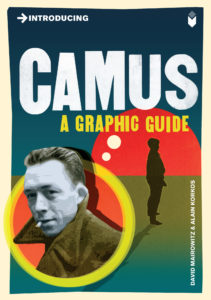
“Introducing Camus” portrays a man who was an intellectual in the tradition of the great French humanists, a Resistance fighter during World War II, and also a great sensualist for whom sun, sea, sex, football, and theater were the answer to life’s absurdity.