Beautiful new edition of a classic comic-book introduction to Marxist thought.
Karl Marx was one of the most influential thinkers of the late 19th century, inspiring revolutions and colossal political upheavals that have radically transformed the lives of millions of people and the geopolitical map of the entire world.
But was he a ‘Marxist’ himself? And how are his ideas still in play in today’s society?
Marxism: A Graphic Guide traces the story of Marx’s original philosophy, from its roots in 19th-century European thinkers like Hegel, to its influence on modern-day culture. It looks at Marxism’s Russian disciples, Lenin, Trotsky and Stalin, who forged a ruthless, dogmatic Communism, and the alternative Marxist approaches of Gramsci, the Frankfurt School of critical theory and the structuralist Marxism of Althusser in the 1960s.
Rupert Woodfin and Oscar Zarate’s classic book, updated by Alex Locascio, explores the life, history, philosophy and politics of this most divisive of thinkers, and argues that Marxism remains a powerful set of ideas even today.

This is a superlative graphic guide described as ‘warm, witty and wise’ by Jonathan Ree to an enigmatic master of twentieth-century philosophy.
This book is full of expert, practical advice which teaches you to use the latest techniques to achieve a healthy state of mind and body. BECOME MORE ENERGIZED by adopting quality sleep patterns. OPTIMIZE MENTAL AND PHYSICAL HEALTH by harnessing your natural ability to heal. ACHIEVE CALM by learning to manage your stress levels. DISCOVER HAPPINESS AND FULFILMENT by investing in yourself and others.
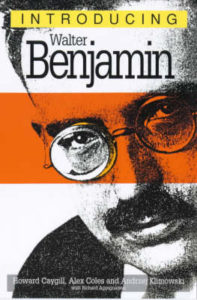
Follows the life and work of Walter Benjamin, tracing his influence on modern aesthetics and cultural history, as well as his particular focus on the tension between Marxism and Zionism, and between word and image in modern art.
Walter Benjamin is often considered the key modern philosopher and critic of modern art. Tracing his influence on modern aesthetics and cultural history, Introducing Walter Benjamin highlights his commitment to political transformation of the arts as a means to bring about social change. Benjamin witnessed first-hand many of the cataclysmic events of modern European history. He took a critical stance on the dominant ideologies of Marxism, Zionism and Technocracy, and his attempt to flee Nazi Europe ultimately led to his suicide in 1940. With its brilliant combination of words and images, this is an ideal introduction to one of the most elusive philosophers.
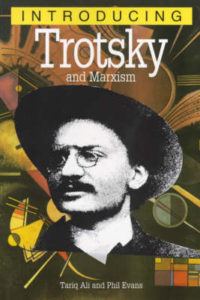
Together with Lenin, Leon Trotsky was one of the architects of the Russian Revolution. A great orator, a skilful military tactician, a gifted historian and an unpredictable cultural theorist, Trotsky was brought down by inner-party factionalism, exiled and then executed by Stalin. This book shows how Trotsky’s prophetic insights foresaw the rise of Hitler and the price humanity would have to pay. Even before the Second World War he predicted the Holocaust. He also foresaw the events in eastern Europe following the collapse of the Communist bloc, predicting in 1936 that the Stalinist system in Russia was merely a transitional state which would either move towards socialism or revert to capitalism. Tariq Ali and Phil Evans give us an irreverent but sympathetic look at the enigma of Trotsky, in a timely reminder of a major figure of 20th century politics.
Wagner’s operatic works rank with the supreme achievements of western culture. But acceptance of Wagner’s musical genius is tempered by feelings of misgiving and many believe the composer’s underlying ideas to be indefensible. A self-styled social revolutionary, Wagner thought the world could be redeemed through vegetarianism and Aryan philosophy. Introducing Wagner: A Graphic Guide separates the composer’s art from the ideas and the arrogant destructive personal behaviour of the man.
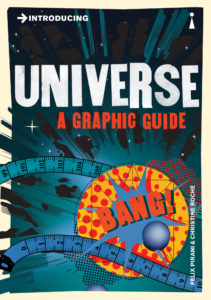
Compact INTRODUCING guide to the science behind the world we live in. The universe is expanding, but how long has the expansion been going on? Will it expand forever, or collapse in a Big Crunch, a Big Bang in reverse? From Aristotle to Newton, Einstein to Quantum Mechanics, INTRODUCING THE UNIVERSE – A GRAPHIC GUIDE recounts the revolutions in physics and astronomy that underlie the present-day picture of the universe.
What is time? The 5th-century philosopher St Augustine famously said that he knew what time was, so long as no one asked him.
Is time a fourth dimension similar to space or does it flow in some sense? And if it flows, does it make sense to say how fast? Does the future exist? Is time travel possible? Why does time seem to pass in only one direction?
These questions and others are among the deepest and most subtle that one can ask, but Introducing Time presents them – many for the first time – in an easily accessible, lucid and engaging manner, wittily illustrated by Ralph Edney.
‘Excellent … an astounding amount of material.’ Times Educational Supplement
Popular culture often portrays the Holocaust as a horrific drama played out between Nazi executioners and ghetto Jewish victims – in short, a single aberration of history.
Introducing the Holocaust is a powerful graphic guide that dissolves this stereotype, explaining the causes and its relevance today. It places the Holocaust where it belongs – at the centre of modern European and world history.
Haim Bresheeth and Stuart Hood – along with Litza Jansz’s outstanding illustrations – bring a unique and unforgettable perspective to how we think about this most dark of shadows on human history.