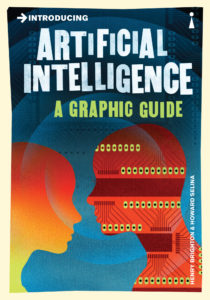
Artificial Intelligence is no longer the stuff of science fiction.
Half a century of research has resulted in machines capable of beating the best human chess players, and humanoid robots which are able to walk and interact with us. But how similar is this ‘intelligence’ to our own? Can machines really think? Is the mind just a complicated computer program?
Addressing major issues in the design of intelligent machines, such as consciousness and environment, and covering everything from the influential groundwork of Alan Turing to the cutting-edge robots of today, Introducing Artificial Intelligence is a uniquely accessible illustrated introduction to this fascinating area of science.

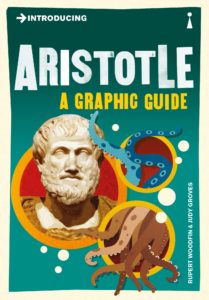
“Introducing Aristotle” guides the reader through an explosion of theories, from the establishment of systematic logic to the earliest rules of science. Aristotle’s authority extended beyond his own lifetime to influence fundamentally Islamic philosophy and medieval scholasticism. For fifteen centuries, he remained the paradigm of knowledge itself. But can Aristotelian realism still be used to underpin our conception of the world today?
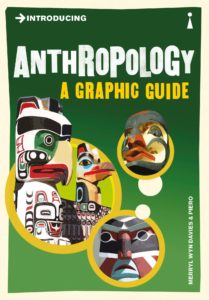
Anthropology originated as the study of ‘primitive’ cultures. But the notion of ‘primitive’ exposes presumptions of ‘civilized’ superiority and the right of the West to speak for ‘less evolved’ others. With the fall of Empire, anthropology became suspect and was torn by dissension from within. Did anthropology serve as a ‘handmaiden to colonialism’? Is it a ‘science’ created by racism to prove racism? Can it aid communication between cultures, or does it reinforce our differences? “Introducing Anthropology” is a fascinating account of an uncertain human science seeking to transcend its unsavoury history. It traces the evolution of anthropology from its genesis in Ancient Greece to its varied forms in contemporary times. Anthropology’s key concepts and methods are explained, and we are presented with such big-name anthropologists as Franz Boas, Bronislaw Malinowski, E.E. Evans-Pritchard, Margaret Mead and Claude Levi-Strauss. The new varieties of self-critical and postmodern anthropologies are examined, and the leading question – of the impact of anthropology on non-Western cultures – is given centre-stage. “Introducing Anthropology” is lucid in its arguments, its good humour supported by apt and witty illustrations. This book offers a highly accessible invitation into anthropology.
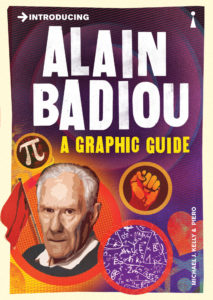
The works of French philosopher Alain Badiou range from novels, poems, ‘romanopéras’ and popular political treatises to elaborate philosophical arguments engaging with mathematical theory.
Badiou suggests that ‘philosophy is always a biography of the philosopher’, and throughout all of his writing there is a staunch commitment to emancipatory politics and a radical yet faithful subjectivity. His famous, or infamous, philosophy of emancipation is firmly grounded in his fidelity to the universal idea of a collective life.
Introducing Alain Badiou is an elegantly written and crisply illustrated guide to an essential contemporary thinker.
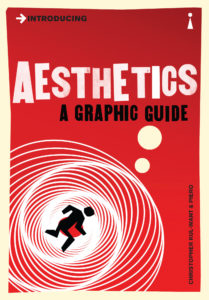
What is beauty, and what is truth? These are some of the questions which aesthetics tries to answer. In our everyday life, we talk about the ‘aesthetics’ of an artwork or a piece of design. But aesthetics goes beyond the simple experience of art. It is also a branch of philosophy concerned with the whole nature of experience itself, explored through our perceptions, feelings and emotions.
‘An outstanding work’ – CN Lester, author of Trans Like Me
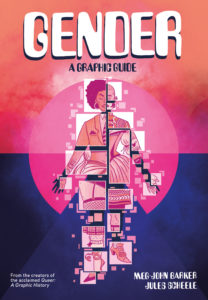
Join the creators of Queer: A Graphic History (‘Could totally change the way you think about sex and gender’ VICE) on an illustrated journey of gender exploration.
Is masculinity ‘toxic’? Why are public toilets such a political issue? How has feminism changed the available gender roles – and for whom? Why might we all benefit from challenging binary thinking about sex/gender?
In this unique illustrated guide, Meg-John Barker and Jules Scheele travel through our shifting understandings of gender across time and space – from ideas about masculinity and femininity, to non-binary and trans genders, to intersecting experiences of gender, race, sexuality, class, disability and more.
Tackling current debates and tensions, which can divide communities and even cost lives, Barker and Scheele look to the past and the future to explore how we might all approach gender in more caring and celebratory ways.
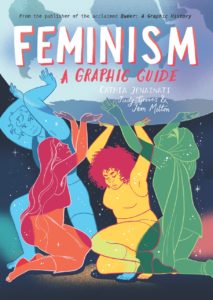
What is feminism? Why are we still talking about it, and what can it tell us about ourselves, our societies and prejudices?
In this unique, illustrated introduction, we’ll explore the early history of conscious struggle against sexist oppression, through the modern “waves” of feminism, up to present-day conversations about MeToo, intersectional feminism, and women’s rights in the Middle East. We’ll look at critical theory, popular action and the social and cultural forces that affect attitudes toward gender, women’s lives and the struggle for equality. And we’ll hear about the contributions of pioneers like Mary Wollstonecraft, Simone de Beauvoir and Kimberlé Crenshaw. As we’ll see, feminism is at once global, local and individual.
Written by Cathia Jenainati with illustrations from Judy Groves and Jem Milton, Feminism: A Graphic Guide engages with the heated debates taking place in our homes, workplaces and public spaces — and the work still to be done.
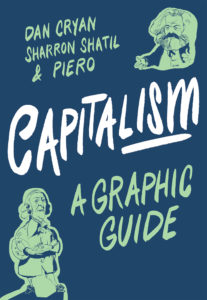
Capitalism shapes every aspect of our world, beyond just our economic structures; it moulds our values and influences the way we write laws, wage wars and even conduct personal relationships.
From its beginnings to the present day, Capitalism: A Graphic Guide tells the story of capitalism’s remarkable and often ruthless rise, evolving through strife and struggle as much as innovation and enterprise.
This non-fiction graphic novel explores the key developments that have shaped our modern world, from early banking to the Opium Wars, financial crashes, the rise of service economies and concerns about sustainability. It also introduces us to the leading proponents and critics of capitalism, providing both a theoretical and practical understanding of this fascinating subject.
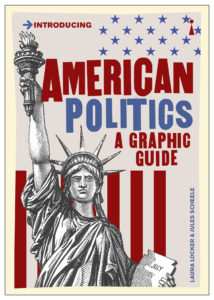
Following in the footsteps of the highly successful Queer: A Graphic History, illustrator Jules Scheele teams up with Dr Laura Locker in this comic-book introduction to the political history of the Land of Opportunity.
How did a political outsider like Trump win the 2016 presidential election? Why do some Americans feel so strongly about gun rights? Is there a role for more than two political parties in the system?
Politics isn’t something that just occurs in the West Wing or the gleaming Capitol building – it comes from the interaction between state and society, the American people living their daily lives. In this unique graphic guide, we follow modern citizens as they explore everything from the United States’ political culture, the Constitution and the balance of power, to social movements, the role of the media, and tensions over race, immigration, and LGBT rights.
Step right up, and see what lies beneath the pageantry and headlines of this great nation.
‘Queer: A Graphic History Could Totally Change the Way You Think About Sex and Gender’ Vice
Activist-academic Meg-John Barker and cartoonist Jules Scheele illuminate the histories of queer thought and LGBTQ+ action in this groundbreaking non-fiction graphic novel.
From identity politics and gender roles to privilege and exclusion, Queer explores how we came to view sex, gender and sexuality in the ways that we do; how these ideas get tangled up with our culture and our understanding of biology, psychology and sexology; and how these views have been disputed and challenged.
Along the way we look at key landmarks which shift our perspective of what’s ‘normal’ – Alfred Kinsey’s view of sexuality as a spectrum, Judith Butler’s view of gendered behaviour as a performance, the play Wicked, or moments in Casino Royale when we’re invited to view James Bond with the kind of desiring gaze usually directed at female bodies in mainstream media.
Presented in a brilliantly engaging and witty style, this is a unique portrait of the universe of queer thinking.